
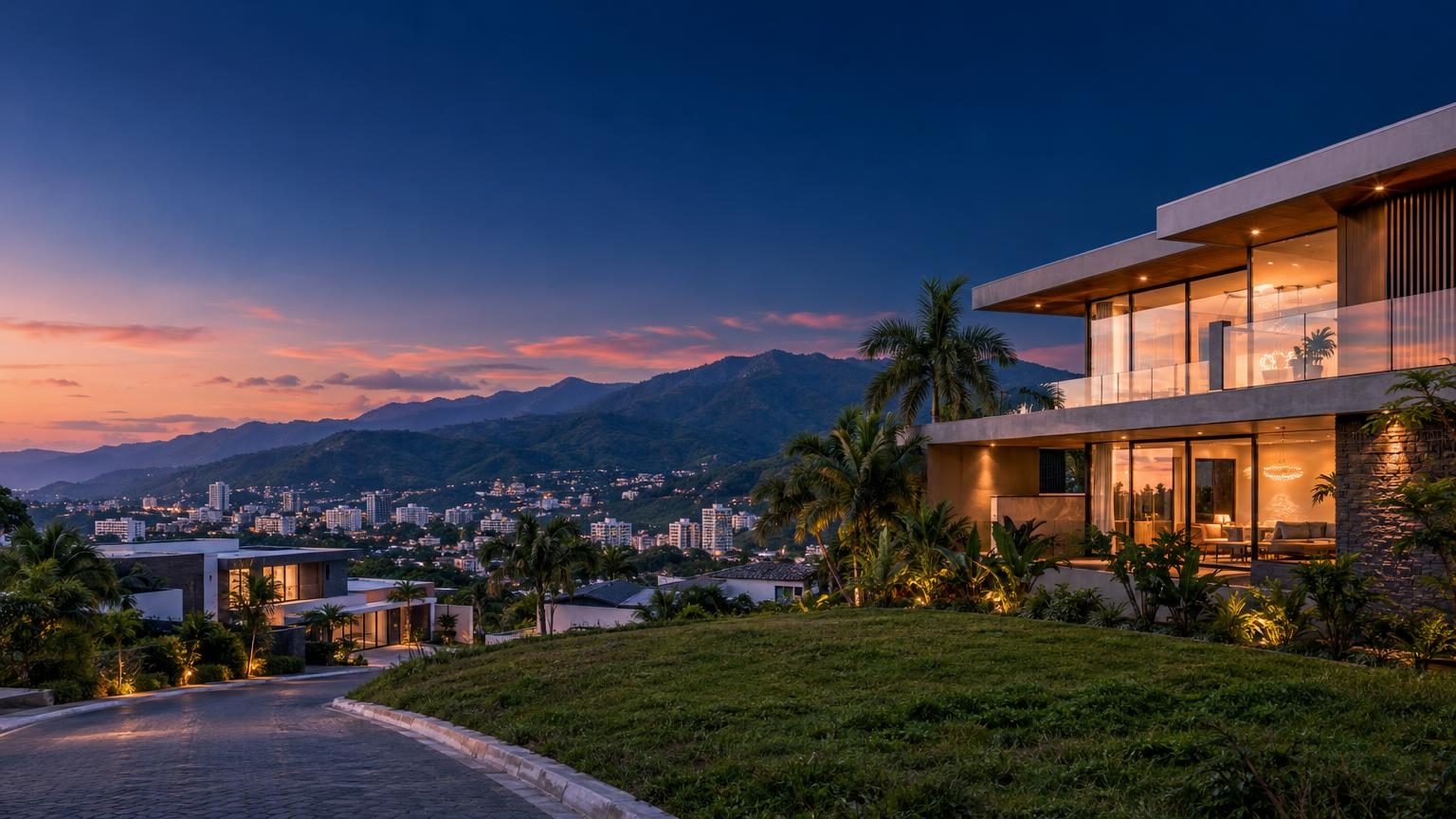
Buying land is one of the most important decisions you can make, whether you want to build your home, put up a commercial space or hold an asset for the long term. Unlike a finished house, a piece of land is a blank canvas: its value depends on what you can do with it. That is why it pays to review several aspects carefully before reserving and signing. In this guide we walk you through, step by step, how to choose land in Honduras with sound judgment.
Define what you want it for first
Before visiting any lot, be clear about your goal. Land for housing is not evaluated the same way as land for retail, a warehouse or a future investment. Ask yourself:
- Do you want to build soon, or hold it while the area grows?
- Will it be for housing, a commercial space, an office, a warehouse or a mixed-use project?
- What size and shape do you need for the design you have in mind?
- What is your total budget, including purchase, paperwork and construction?
Location and surroundings
Location weighs heavily on both the value and the usefulness of land. Visit the area on different days and at different times to observe traffic, noise, safety and commercial activity. If you plan a business, check whether foot and vehicle traffic favors visibility. If it is for housing, look at proximity to schools, health centers, public transport and main roads.
Tegucigalpa and San Pedro Sula have very different zones, each developing at its own pace. Ask what projects or infrastructure improvements are expected in the area, but verify them with official sources rather than relying only on hearsay.
Access, terrain and utilities
A lot can look appealing in photos and still be expensive to develop. Check these points in person:
- Access: the road should be passable year-round, and the lot should have street frontage or a legally recognized right of way.
- Terrain: flat land is usually simpler to build on, while sloped land may require retaining walls and earthmoving.
- Drainage: observe where water flows when it rains and whether any areas flood.
- Utilities: confirm whether drinking water, electricity, sewer and telecom connections are available, or what it would take to bring them to the lot.
- Soil type and risks: ask an engineer whether the soil suits your project and whether the area faces risks such as landslides or flooding.
Land use and permits
This is one of the most overlooked points. Not every lot allows every kind of construction. Each municipality defines which uses are permitted in each zone, and that can change your project entirely. Before buying, ask the relevant municipality about land use, height or density restrictions and the requirements for building permits. These procedures and their costs vary by municipality, so confirm them directly with the authorities and with a professional.
Check the legal status of the land
Legal certainty is as important as the physical condition of the lot. Before paying any amount, have a lawyer or notary review the property's documentation:
- Deed or title in the seller's name.
- Registry certificate showing any liens, mortgages or attachments.
- Proof that taxes and utilities are paid up to date.
- Survey and measurements that match the real lot and its neighbors.
Legal costs, taxes and transfer fees vary from case to case. Confirm them with a notary, a lawyer or your bank before committing.
Land to build on or to invest in: what changes
If you plan to build, prioritize a lot that fits your design, has nearby utilities and allows a compatible land use. If you see it as an investment, think about liquidity: well-located land with clear access and documents in order is usually easier to sell or lease in the future. Keep in mind that land value can rise, fall or stay flat, and no one can guarantee a return. Weigh your time horizon and your ability to wait.
If you are exploring options, you can browse land for sale in Tegucigalpa or commercial properties for sale in San Pedro Sula to compare locations, sizes and possible uses.
Common mistakes to avoid
- Buying on price alone, without checking access, utilities or documents.
- Paying before a professional has verified the legal status of the land.
- Ignoring land use and later finding out you cannot build what you planned.
- Overlooking site preparation costs: clearing, leveling, utility connections and fencing.
- Visiting the lot only once, at a single time of day, without getting to know the surroundings.
A simple step-by-step approach
- Define your goal, your budget and the area you are interested in.
- Visit several lots and compare them using the same checklist.
- Ask the municipality about land use and permits.
- Have a lawyer or notary review the documentation.
- Confirm transfer costs, taxes and financing with the professionals and the bank.
- Negotiate, formalize the purchase and plan the next steps of your project.
We walk you through the process
At Luma Premier Properties we help you find the land that best fits your project in Tegucigalpa or San Pedro Sula. You can explore every available option in our properties section and get your questions answered by our team. Write to us on WhatsApp at +504 9710-1789 and tell us what you are looking for: we will gladly guide you so you can make an informed and secure decision.